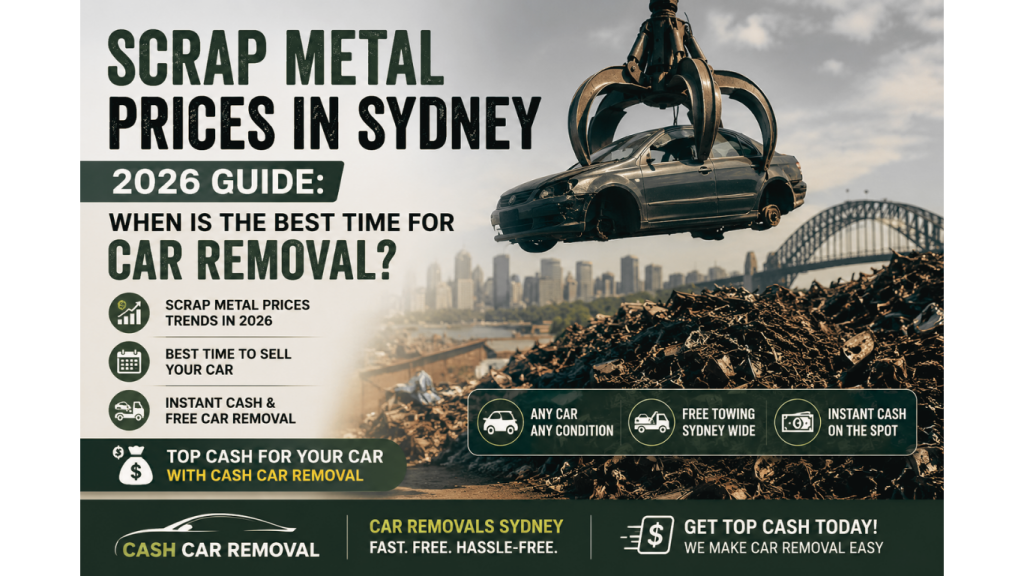
Scrap Metal Prices in Sydney – 2026 Guide: When Is the Best Time for Car Removal?
Selling old, broken or unwanted cars in Sydney is no longer just about clearing the area of your driveway – it’s a strategic financial opportunity immediately connected to far-flung global and neighborhood scrap markets. Whether you have an end-of-life sedan sitting in your garage or an accident-wrecked ute parked on the road, a know-how recycling cargo quote selection can mean masses of dollars in the end when booking specialist Car removal in Sydney.
By 2026, the metal recycling environment in New South Wales is adapting to changes in international manufacturing demand, neighbourhood production cycles and sustainable automotive recycling practices. This complete guide breaks down current scrap metal valuations, key market trends, absolute changes, and how you can make the most of it mu again.
Understanding the Scrap Metal Market in Sydney (2026 Overview)
An unwanted vehicle is much more than just discarded plastic and rubber; it is an aggregation of valuable ferrous and non-ferrous metals. When specialized auto wreckers evaluate a car for removal, its underlying scrap metal value forms the financial baseline of the valuation offer.
Primary Metals Found in Average Passenger Vehicles:
Heavy & Light Steel (Ferrous Metal): Approximately 60% to 65% of the total scaled down weight of the vehicle, which includes chassis, door panels and body frame
Cast Iron: Commonly found in engine blocks, brake rotors, and gear housings.
Aluminum (ferrous metal): Found in alloy wheels, cylinder heads, engine blocks and radiators.
Copper and brass: electrical wiring harnesses, starter motors, alternators, etc., which are woven sometimes.
Platinum, Palladium & Rhodium: High-value precious metals found in catalytic converters for automobiles.
Average Scrap Metal Rates in Sydney (2026 Baseline):
Metal commodity rates fluctuate daily based on international spot market indices (such as the London Metal Exchange) and regional Sydney processing supply. Below is a realistic breakdown of recycling market benchmarks across NSW:
| Metal Category | Scrap Type in Vehicles | Average Price Range (AUD) |
| Heavy / Light Steel | Body shell, chassis, panels | $150 – $350 per tonne |
| Scrap Aluminum | Alloy rims, engine heads, radiators | $1.00 – $2.50 per kg |
| Copper Wiring / Tubing | Automotive wiring looms | $3.50 – $10.00+ per kg |
| Lead-Acid Batteries | Standard vehicle batteries | $0.30 – $0.80 per kg |
| Catalytic Converters | PGM recovery units | $50 – $800+ per unit (based on serial #) |
Key Factors Influencing Scrap Car Valuations in Sydney
While global commodity spot rates determine base metal value, local market variables dictate how much cash you receive in hand during a vehicle pickup.
1. Global Demand for Recycled Steel & Copper
When infrastructure development and automotive production surge globally, the demand for recycled metal increases. Recycled steel uses significantly less energy than refining raw iron ore, making scrap metal a highly sought-after commodity worldwide. High international demand pushes local Sydney scrap yards to pay higher rates per tonne.
2. Vehicle Weight and Curb Metal Density
A compact hatchback weighs roughly 1.0 to 1.2 tonnes, whereas a full-sized 4WD or commercial van can weigh anywhere from 2.0 to 3.5 tonnes. Since scrap metal is purchased by weight, heavier vehicles naturally yield significantly higher cash payouts regardless of their running condition.
3. Completeness of Key Components
A complete vehicle commands top-dollar offers. If a car has been stripped of its catalytic converter, engine, transmission, or battery, its overall scrap value drops dramatically. Auto wreckers pay premium prices when all high-value non-ferrous components remain intact.
4. Local Logistics and Towing Access
Fuel costs, driver labor, and transport distances impact the net valuation of a scrap car. Working with an established service providing localized car removals Sydney ensures that towing overheads do not deduct from your final cash offer.
When Is the Best Time for Car Removal in Sydney?
Timing your vehicle removal strategic can maximize your total return. Consider these market conditions when deciding to sell your vehicle:
1. During Construction and Infrastructure Booms
Spring and summer in Sydney typically coincide with increased construction and infrastructure activity across Greater Western Sydney and NSW. Higher industrial demand drives up scrap steel and aluminum processing rates, creating ideal timing for vehicle recycling.
2. Before Vehicle Registration (Rego) Renewal
If your old vehicle is sitting unregistered or nearing its green slip and rego renewal date, holding onto it incurs passive costs. Selling the car before paying unnecessary registration fees or council parking fines ensures you retain net profit rather than sinking money into a deteriorating asset.
3. When Commodity Metals Experience Market Spikes
Keep an eye on trends surrounding copper, steel, and aluminum prices. When base metal prices experience upward trends, reputable removalists adjust their pricing metrics, offering elevated payouts for complete scrap cars.
4. When Space Real Estate Value Outweighs the Car
An immovable, unregistered vehicle sitting on a residential driveway or garage takes up valuable space and risks leaking toxic fluids like engine oil, coolant, and brake fluid. Removing a non-running car eliminates environmental hazards and frees up domestic property value.
Why Choose Cash Car Removal for Your Vehicle Pickup?
Navigating private buyers, vehicle rego transfers, and transport logistics can be stressful. At Cash Car Removal, we eliminate the friction from selling old, scrap, or damaged vehicles across all Sydney suburbs.
- Instant Cash Offers: We calculate fair market valuations based on real-time scrap metal rates and vehicle component conditions, offering up to $9,999.
- 100% Free Car Removal: No hidden towing fees, callout charges, or administrative deductions.
- Same-Day Collection: Our fleet operates across Sydney, the Central Coast, and surrounding regions for fast, hassle-free collection.
- Paperwork Handled: We guide you through New South Wales Transport registration cancellation and ownership handover seamlessly.
- Eco-Friendly Auto Recycling: Vehicles collected undergo strict environmental fluid depollution and responsible metal recycling protocols.
Ready to Turn Your Scrap Car into Instant Cash?
Don’t let a non-running or damaged vehicle sit around losing value. Get a free, no-obligation quote based on today’s current scrap metal rates. Contact the team at Cash Car Removal today to schedule your free pickup.
- 📞 Phone:1300 690 880
- 🌐 Online Quotes & Inquiries: Visit our Contact Us page to submit your vehicle details and receive an instant quote within minutes!
Frequently Asked Questions (FAQs)
How are scrap car removal prices calculated in Sydney?
Scrap car valuations are calculated using the vehicle’s total curb weight, make, model, completeness (presence of engine, transmission, catalytic converter), current market rates for scrap steel and non-ferrous metals, and the pickup location.
Do I need to pay for towing when booking car removals in Sydney?
No, reputable operators like Cash Car Removal provide completely free vehicle removal across Sydney. The price quoted is the exact amount paid to you upon pickup, with no deductions for towing or administrative fees.
What documents do I need to prepare before my car is collected?
You will need a valid photo ID (such as an Australian Driver’s License or Passport) and proof of vehicle ownership. You will also need to remove your registration plates to return them to Service NSW for a registration refund.
Can I sell a car for scrap if it has a blown engine or major collision damage?
Yes. Scrap metal removalists purchase vehicles in any physical or mechanical condition. Even if a car is completely non-running, flood-damaged, or involved in a severe crash, its raw metal and intact components retain real cash value.
How do global scrap metal prices affect my car’s valuation?
Because scrap metal is an internationally traded commodity, fluctuations in global steel, aluminum, and copper prices directly affect local processing valuations. High market demand allows auto recyclers to offer higher payouts for vehicle collections.
How long does the car removal process take once booked?
Once you accept a quote, pickup can usually be scheduled for the same day or within 24 hours. The on-site towing process, paperwork sign-off, and cash transfer typically take around 15 to 30 minutes.
Recent Posts
- Real Scrap Value of an Old EV: How Much Cash Can You Get?
- Scrap Metal Prices in Sydney – 2026 Guide: When Is the Best Time for Car Removal?
- How Eco-Friendly Recycling Maximises Your Payout for Cash For Engine Problem Cars
- Critical Factors that Dictate Accident Car Removal Value
- How to Cancel NSW Registration When Selling Your Cash for Old Car in Sydney
- Cash for Junk Cars: How Seasonal Steel Prices Impact Your Scrap Value in NSW
- Selling a Car with Engine Problems in Sydney? What You Need to Know
- Electric Car Not Running? How to Still Get Cash for It in Sydney
- Looking for Fast Cash for a Van? How to Get Paid Within 24 Hours
- Things to Check Before Choosing a Service for Car Disposal in Sydney